The psychology behind slot machines is a subject of great interest and debate. Casinos carefully design their gaming floors, placing the most enticing and visually stimulating slots in high-traffic areas to attract players. The sounds of winning, the clinking of coins, and the flashing lights contribute to the sensory overload that keeps players engaged. The concept of “near misses,” where the symbols come tantalizingly close to a winning combination, but fall just short, is a well-documented psychological tactic that keeps players pulling the lever or pressing the spin button.
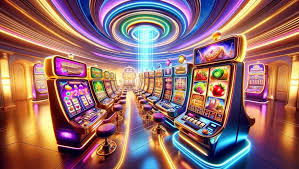
Slot models also integrate various reward elements to encourage continued play. Free spins, bonus models, and fun mini-games are popular characteristics made to supply participants with an expression of achievement and excitement. The use PRAGMATIC vibrant shades and celebratory animations when a win happens further reinforces positive feelings and encourages players to continue playing.However, it’s important to recognize that while position models provide enjoyable amusement and the possibility of substantial winnings, they also take a substantial component of risk. The chances are usually loaded and only your house, and for every jackpot winner, you can find countless other individuals who experience losses. Responsible gaming techniques and self-control are essential when interesting with slot machines to make sure that the satisfaction remains within balanced boundaries.
In conclusion, the position unit is a interesting and enduring form of amusement that has evolved significantly because its inception. From the mechanical ease of the Liberty Bell to the amazing digital displays of today’s movie slots, the position machine has maintained its position as a favorite fixture on the planet of gambling and gaming. Its mix of chance, psychology, and technology continues to enchant people all over the world, rendering it an amazing and legendary mark of gaming excitement.A position device, frequently described colloquially as a “slot” or “one-armed bandit,” represents an renowned image of the gambling world. It stands as a testament to the mix of chance and activity, beckoning players with the promise of immediate wealth or even a exciting experience. While its fundamental axioms have kept somewhat consistent with time, the development of position machines has been nothing in short supply of remarkable.
The origin of the slot unit could be traced back once again to the late 19th century each time a man named Charles Fey, a technician from San Francisco, created the world’s first physical slot machine in 1895. That innovation, referred to as the “Liberty Bell,” had three rotating reels with representations such as horseshoes, stars, and playing cards. The Liberty Bell’s defining function was their computerized payout mechanism, which allowed participants to receive their winnings instantly. That innovation put the building blocks for the modern position device and paved just how for its quick proliferation.
In the early times, these mechanical position machines were not at all hard, with a limited number of icons and paylines. Players could insert a cash, pull the lever (hence the handle “one-armed bandit”), and a cure for a profitable combination. The Liberty Bell compensated out rewards like cigars or beverages, highlighting the era’s prevailing attitudes towards gambling and chance.As the acceptance of slot models became, so did the demand for innovation. The early 20th century saw the release of fresh fruit designs on the reels, a nod to the fruity gum and candy rewards that might be won. That is where in fact the popular cherry and lemon representations started, which are still recognizable in today’s slot games. The devices also began to function more reels and paylines, providing participants more ways to win.